mercoledì 16 agosto 2017

CELEBRATION FOR 100 YEARS OF OSCAR ROMERO – HOMILY


Your Excellency,
Dear sisters. Dear brothers,
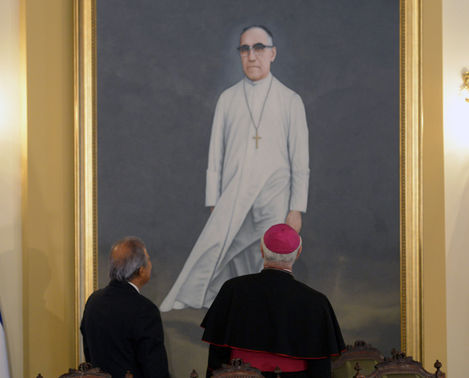
We are gathered today around the altar of the Lord to commemorate the centenary of the birth of Blessed Oscar Arnulfo Romero.  Today, all of us here, together with others in El Salvador and in other parts of the world, remember this shepherd for his Gospel witness that brings light to believers and non-believers alike.  On that long ago August 15, 1917, God chose the child born that day for a great mission:  to prepare the hearts of his fellow countrymen to welcome the Gospel of his Son.  As often happens with prophets, Romero paid with life.  His birth, his life, and especially his death were all focused on Jesus.  He made his own the words that Paul wrote to the Romans: “What will separate us from the love of Christ?  Will anguish, or distress, or persecution, or famine, or nakedness, or peril, or the sword?…For I am convinced that neither neither death, nor life … nor other creature will be able to separate us from the love of God…. ” (Rm 8:35, 39). The last years of his pastoral life were guided by those exact words.  Pope Francis has made it clear that Romero was persecuted even after his death with the opposition to his beatification that many persons mounted.  But when May 25 last year finally came, more than sixty thousand people gathered around the altar to thank the Lord for sending this shepherd.  And I’ll never forget the emotion of that day.  At his tomb, many, just as when he was alive, spoke to him because they felt he was still with them!
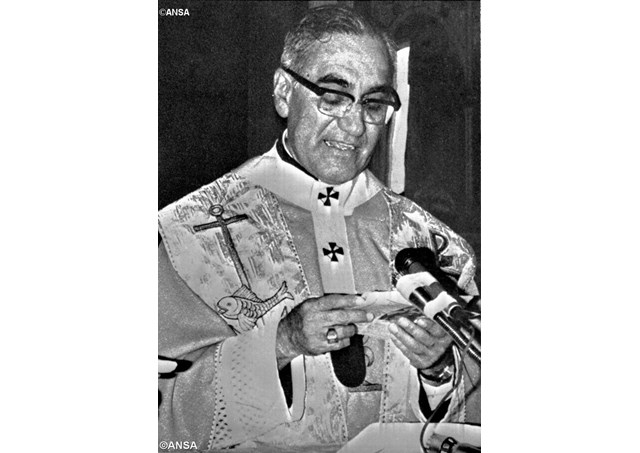
Today, on the centenary of his birth, we remember him yet.  And we do so beginning with the day he entered Heaven.  It was on March 24, 1980, that he was assassinated at the altar just after his homily nd while he was preparing the gifts at the Offertory.  They silenced him with a single shot to the heart, but now he speaks to us even more clearly.  His death is written in the heart of the Twentieth Century Church.  In ages past, only two other bishops met the same fate:  St. Stanislaus, Bishop of Kraków, and St. Thomas à Becket, Archbishop of Canterbury.
I myself remember the emotion of St. John Paul II when he heard that Romero had been assassinated.  And when, at the Celebration for New Martyrs during the Great Jubilee of the Year Two Thousand, he saw that Romero’s name had been left out—that’s how strong Curia opposition was—the Pope added it, writing that Romero was an example of the Shepherd who lays down his life for his flock.  And today, Romero’s death continues to speak to us in the martyrdoms of the many priests in the Middle East who have been assassinated while celebrating Sunday Mass.  Romero was the first in this long line heros who died for Christ in the Twentieth Century, in the New Millennium.  And with him, let us remember all the Christians who continue to bear witness to the Gospel even unto the shedding of their blood.
Keeping alive the memory of Romero is a noble task, and my great hope is that Pope Francis will soon canonize him—a Saint!  Over the years, we insisted on Romero being recognized as a martyr.  The essence of his holiness was his following the Lord by giving himself completely for his people.  But let’s be realistic, Romero was not a Superman. He was afraid of dying, and he confessed that to his friends on a number of occasions.  But he loved Jesus and his flock more than he loved life.  This is the meaning of martyrdom.  Love for Jesus and the poor is greater than love for oneself.  This is the power of Romero’s message.  A simple believer, if overwhelmed by love, becomes strong, unbeatable.  Several times, to shut him up, he was threatened with death, but Romero, following the Good Shepherd who gave His life for His sheep, would not shut up; and when he was advised, even by Rome, to leave the country because the threats had become more direct, he replied: “The shepherd never leaves his sheep, especially not when then they are in danger.”
And today Romero repeats in Heaven the prayer of Jesus at the Last Supper: “When I was with them, I protected them in your name … and guarded them…” (Jn 17:12)  Romero died to save his people, to save them from the violence of injustice.  I believe that the verse I just quoted was one that Romero often meditated on, just as he meditated on other passages that speak of giving one’s life to protect the flock, and before he preached this message to others, he preached it to himself, and he chose to be like Jesus, giving his life for his flock.  For this reason, he could not, just to save himself, keep silent in the face of the injustices suffered by the powerless.   He began to denounce them publicly.  He did not shirk before the forces of power, and he found his power in the love that Christ has for the poor.  It was the Gospel that led him, it was the Magisterium of Vatican II and of the Latin American Church with its preferential option for the poor.  Those who were oppressing the poor did not like the Church that Romero exemplified.  Indeed, they believed it to be a politicized Church.  Romero chose to be faithful to the Church presented by the Council.  He became a forceful witness of its love for the poor, and he gave his life at the altar in union with Christ Himself—victim and priest at the same time.  A nun who was at that Mass and who saw Romero die before he raised the bread and wine to Heaven, told me, “that day I thought Romero was, like Jesus, both victim and priest.”
The Martyr’s death that Romero suffered is his most precious gift to us.  That gift is especially precious in our days, and the people know it.  That’s why his testimony continues to be welcomed all over the world.  Yes, dear sisters and dear brothers, in a world where self-love and self preservation are supreme values, where we protect ourselves from others by raising building walls and barriers both in our hearts and in our relationships, Romero’s example is a shining beacon, a light that delivers individuals and peoples from the darkness of egoism.  Romero is speaking to us, and I can hear the echo of his last Sunday homily: “In the name of God, and in the name of this suffering people, I beg you, I beseech you; I order you in the name of God—stop the repression.”  There is too much violence in the world, there is so much violence in El Salvador, where gangs continue to bloody the country.  There is violence in too many countries in the world; too many wars; Hunger is too widespread and there is too much injustice to number.  Ours is a world of indifference that lets evil reap its harvest of innocent souls, young and old..  There is too much terrorist violence that sows death and fear.  Today, Romero asks the whole world to stop the violence, stop the killing.
Dear sisters and dear brothers, we need a real conversion away from fear, indifference, superficiality, just as Archbishop Romero was converted when he lived through the death of Father Rutilio Grande with his two peasant friends.  Romero became a defender of the poor, and we too are asked to leave behind a Christianity that is just habit and self-reference. Today, in our own world, we need a Gospel Christianity that knows how to witness love for everyone, especially for the poor, a Christianity that inspires us to give our life for others.  Romero did not think of himself, did not defend himself, did not spare himself.  Romero followed Jesus who gave his life for others. This was his witness.  He witnessed a Gospel and a Church that “goes out” to save everyone, no one excluded.  It is the Church of the Second Vatican Council that Blessed Paul VI compared to the Good Samaritan who bends down before the hurts of today’s humanity.  Romero is a martyr who exemplifies the Church that Vatican II wanted—a martyr of the Church of Vatican II.  And Pope Francis is not just a defender of that Church.  With Romero in the Heaven and with Francis on the Throne of Peter, the Church goes out of itself and becomes a Good Samaritan in the world.  We needed a Latin American Pope before Romero could be raised to the honors of the altar.  I remember the  words that Pope Francis said to me when we met on the first day of his Papal Ministry, March 19, 2013. He asked: “How is the cause of beatification of Archbishop Romero doing? ”
Romero believed in the missionary power of the Council.  In a homily at the funeral of a priest killed by death squads, he said that Vatican Council II calls on all Christians today to be martyrs, that is, to give their lives to Jesus and the poor. “Some, he said, the Lord asks to shed their blood, as He did to this priest, but he asks all to give their life for others, to be martyrs.” He gave another example, that of a mother who conceives a child, carries it in her womb, gives it birth, nourishes it, cares for it.  Romero said, “This mother is a martyr because she is giving her life for her child..”  Dear sisters and dear brothers, martyrdom—giving one’s life—is the only way to follow the Gospel in our time.  We can not be disciples who act only out of habit and are thinking only of ourselves.  That is not Gospel joy.  Romero reminds us of the teaching of Jesus that was quoted by the Apostle Paul: “There is more joy in giving than in receiving” (Acts 20:35).  Indeed, martyrdom, giving one’s life for others, is the only way to follow Jesus and the only way to be truly blessed.


venerdì 11 agosto 2017

Cento anni fa nasceva Romero: ucciso per aver scelto i poveri


di Francesca Sabatinelli 

Il prossimo 15 agosto ricorrono i cento anni della nascita del Beato Oscar Arnulfo Romero
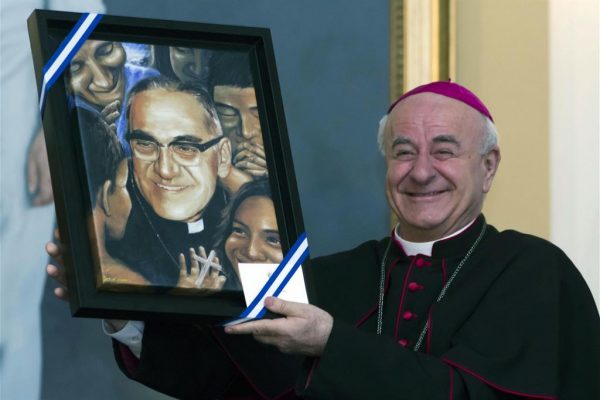
. Per ricordare l’arcivescovo e martire, ucciso nel 1980 in Salvador dagli squadroni della morte, sabato 12 agosto viene celebrata una Messa nella Cattedrale londinese di San Giorgio a Southwark: qui è conservata una croce con le reliquie del Beato. Un altro importante appuntamento delle celebrazioni che ricorderanno il centenario di mons. Romero sarà il 23 settembre nella Cattedrale di Westminster, dove ci saranno i Vespri ecumenici alla presenza dei rappresentanti di tutte le Chiese cristiane d’Inghilterra. A pronunciare l’omelia sabato nella Cattedrale di San Giorgio sarà mons. Vincenzo Paglia, presidente della Pontificia Accademia per la Vita, nonché postulatore della causa di canonizzazione di Romero. Ai nostri microfoni ci spiega l'importanza di ricordare l'arcivescovo di San Salvador:

"Ricordarlo è importante perché è uno dei testimoni che ha segnato la storia della Chiesa dal Vaticano II in poi. Non a caso il 24 marzo, giorno del suo martirio, si celebrano i martiri di tutta la Chiesa contemporanea – i nuovi martiri – e, per di più, le stesse Nazioni Unite hanno scelto questo giorno come giorno di memoria della libertà della propria fede, della testimonianza delle proprie convinzioni".

Eppure, non bisogna dimenticare che ci sono ancora delle resistenze proprio a casa di mons. Romero, in Salvador, per quanto riguarda la memoria di quest’uomo, di questo martire…


"Le resistenze purtroppo non sono solo a casa, ma anche fuori, e vicino a noi tante volte. La resistenza nasceva dal fatto che, come scrive il Concilio Vaticano II, come la Chiesa latinoamericana immediatamente dopo il Concilio aveva affermato: il Vangelo non è indifferente, il Vangelo non è una devozione, il Vangelo cambia il mondo. E Romero aveva compreso che, per cambiare il mondo, occorreva ripartire, come scrive il Vangelo, dall’amore per i poveri. Molti hanno pensato che questa scelta per i poveri fosse una scelta politica, dettata magari da un’analisi marxistaMa non è così: la scelta di amare i poveri per cambiare il mondo è la stessa che fece Gesù. Questa scelta Romero la fece sua, e molti si opposero fino ad ucciderlo. Si opposero quelli che, anche se "cristiani", erano però dei dittatori, coloro che volevano soggiogare i più poveri, sfruttarli e violentarli, Romero scelse invece questa Chiesa. Ed ecco perché c’è un grande consenso attorno a lui. Lo hanno voluto uccidere per farlo tacere. Romero, con il sacrificio della vita, continua oggi a parlare".

Una scelta, quella di mons. Romero, che, ha detto Papa Francesco, ha condotto anche a un martirio post mortem…

"Sì, Papa Francesco pronunciò queste parole davanti ai vescovi del Salvador e a un pellegrinaggio di salvadoregni, venuti per ringraziarlo della beatificazione di Romero. E Papa Francesco scandì queste parole con una forza che io non dimentico. È l’opposizione che ancora oggi tanti, o alcuni, vogliono fare allo stesso messaggio di Papa Francesco: il Vangelo non lascia il mondo così com’è, il Vangelo non lascia i credenti come se nulla fosse. Il Vangelo chiede di scegliere, di stare dalla parte dei poveri, dei sofferenti, di dare la vita per questo, ecco perché Papa Francesco, sottolineando anche l’opposizione post mortem a Romero, in fondo continua a dire quello che già Gesù tante volte aveva detto: “Se hanno perseguitato me, perseguiteranno anche voi”. Ed ecco perché non dobbiamo arrenderci o arretrare, ma dobbiamo continuare a guardare Romero come un grande esempio di credente, di nuovo martire di questo tempo Come si può essere cristiani, guardare Romero e poi essere indifferente a quelli che muoiono nel Mediterraneo o alzare barriere e muri oppure girarsi dall’altra parte di fronte ai conflitti?"
Mons. Paglia, a che punto è il processo di canonizzazione?

"Io credo che siamo a un buon punto. Stiamo esaminando un miracolo che riguarda una donna incinta e il suo bambino che sono stati, speriamo, miracolosamente guariti per intercessione di mons. Romero. È stato terminato il processo diocesano, che è giunto a Roma e abbiamo iniziato l’esame del miracolo. Mi auguro che il processo vada a compimento presto. Se tutto questo accade, è possibile che anche l’anno prossimo si possa sperare di celebrare la canonizzazione di Romero".

(da Radio Vaticana)

mercoledì 12 luglio 2017

Motu Proprio su “offerta della vita”: “riscopriamo il cristianesimo contemporaneo come martirio”

“O riscopriamo il cristianesimo contemporaneo come martirio oppure lo riduciamo ad una semplice aggiunta alla nostra vita”. Così mons. Vincenzo Paglia, presidente della Pontificia Accademia per la Vita, commenta il Motu proprio di Papa Francesco “Maiorem hac dilectionem”. Intervistato dal settimanale dell’arcidiocesi di Gorizia, “Voce Isontina, mons. Paglia esprime, innanzitutto, la propria gioia per il documento papale anche perché, sottolinea, “ne sono stato in qualche modo coinvolto come postulatore della Causa di beatificazione di mons. Oscar Arnufo Romero”. “L’arcivescovo di El Salvador, infatti, – prosegue – non è stato ucciso da persecutori atei affinché rinnegasse la fede nella Trinità: è stato assassinato da cristiani perché voleva che il Vangelo fosse vissuto nella sua profonda intuizione di dono della vita. E questo è un aspetto già emerso in passato nel cammino che ha portato alla beatificazione di padre Massimiliano Kolbe e di don Pino Puglisi e che ora si ripresenta in quella di monsignor Romero”. E per far comprendere ancora più profondamente il significato del Motu proprio, mons. Paglia ricorda alcuni passi di un’omelia che proprio mons. Romero pronunciò durante il funerale di un sacerdote ucciso dagli squadroni della morte.
“Il Concilio Vaticano II chiede a tutti i cristiani oggi, per la situazione in cui ci troviamo a vivere, di essere martiri ossia di dare la vita per il Signore e per gli altri. Ad alcuni il Signore chiede la vita fino all’effusione del sangue ma a tutti chiede di dare la vita per gli altri. Una mamma che concepisce un figlio, lo tiene nel suo grembo, lo fa nascere, lo custodisce, lo allatta e lo preserva dalle malattie è una martire perché sta donando la vita”. “In questo senso – conclude mons. Paglia – riscoprire il martirio come dono della vita significa comprenderne appieno il significato in tutta la sua forza. Anche oggi”.

giovedì 30 marzo 2017

Opposition to Óscar Romero's canonization was ‘political


Archbishop Vincenzo Paglia, the president of the Pontifical Academy for Life and the postulator for the cause of Blessed Óscar Romero, experienced firsthand pushback against the archbishop’s canonization. The delay was political and “like a dagger in my heart,” he told James Martin, S.J., in a video interview with America.
"His beatification was the result of a great struggle," said Archbishop Paglia, who was wearing Archbishop Romero’s pectoral cross during the interview. "There were many in Rome, including some cardinals, who did not want to see him beatified. They said that he had been killed for political reasons, not religious ones. I studied this question, I did a great deal of work. For example, I examined his personal archives, which comprise some 70,000 documents. What emerged was a man devoted to his people. He wanted to free them from oppression. He wanted to bring to them the compassion of Jesus."
This resistance to Romero's beatification had personal implications for Archbishop Paglia.
“I even received threats when I took on this task. But I believed that the example of Romero was so extraordinary, so evident. In him, the Gospel message is summed up in an extraordinary way. Romero did not live for himself but for his people, like Jesus. This witness is so clear that in a globalized world it can touch the hearts of millions and millions of individuals. And if we want to change the world, we have to change the hearts of the people, just like Romero did.”
Archbishop Paglia also spoke with Father Martin about how Romero became more involved with the struggles of the people of El Salvador after the assassination of Rutilio Grande.
“[Rutilio Grande] was a Jesuit who taught at the university level but chose to live in a small village just so that theology could be spread among the people through him. This presence in the village led to his being murdered; he and two peasants with him. Romero had become archbishop only 17 days earlier and he stayed up all night watching over the body of Grande, his good friend. That night, Romero wrote, he realized that it was his duty to take the place of Rutilio Grande. And in this sense, the martyrdom that Grande suffered before Romero lead Romero to conclude that the evangelical life, the life of a pastor, is worthwhile only if it is spent in the service of others.”
According to Archbishop Paglia, Pope Francis has been crucial in moving Romero’s canonization forward. Though the pope never met Romero, he did meet Grande and has also wanted to push forward his canonization.
“[Pope Francis] wants to have Rutilio Grande’s cause for beatification introduced as well. And as well the two peasants, one a young boy and one an elderly man, who were killed with him,” Archbishop Paglia said.
In addition to speaking about Romero, Archbishop Paglia offered some insights into the interpretation of “Amoris Laetitia,” Pope Francis’ statement on the family
“True indissolubility, the model for all indissolubility, is that which must exist with respect to the church and its children. Marriages can break down, but the relationship of the church with its children must never break down because that indissolubility is the clear sign of God’s love for his children, the God who is able to leave the 99 and look for the one who is lost.”
“Amoris Laetitia” teaches us about discernment as a process within the family, the archbishop said.
“When Pope Francis convoked the synod, he wanted to make it not about doctrine but rather about discernment, and in fact, the second chapter of ‘Amoris Laetitia’ is a discernment about the current situation of families, it is a wise spiritual reflection. In that chapter, Pope Francis talks about the ideal that families are to reach. Actually, he raises the bar to reaching that ideal, he doesn’t lower it, but he points out that to reach the ideal, we have to discern, that is, we have to see families in their concrete situation, and to do that we must accompany them over time.”
Archbishop Paglia also spoke about our current world situation as "a kind of dictatorship of materialism and money."
"For that reason, we need a cultural revolution. Human dignity means making every person, from the youngest to the oldest, from the holiest to the greatest sinner, the center of concern of the church, of politics, of the economy, of culture, of the arts and the trades. All of society is based on human dignity."
Exemplary lives, like that of Romero, remind us about how human dignity is at the center of the church’s mission, he said.

venerdì 10 marzo 2017

Ecco il miracolo che potrebbe portare Romero sugli altari

Il prossimo 24 marzo saranno 37 anni dall’uccisione di Óscar Arnulfo Romero y Galdámez. L’arcivescovo di San Salvador stava celebrando la Messa nella cappella di un ospedale, quando un uomo gli puntò una pistola e sparò un colpo, fatale. Un’inchiesta delle Nazioni Unite ha poi appurato che si trattava di un sicario di Roberto D’Aubuisson, leader del partito nazionalista Arena e che l’assassinio era stato voluto per le continue denunce delle violenze che vedevano coinvolte milizie paramilitari alle dipendenze dello stesso D’Aubuisson.
Quello di Romero è stato riconosciuto come martirio, assassinio in odium fidei, al termine di un travagliato processo canonico culminato con la beatificazione il 23 maggio 2015 a San Salvador. La notizia che si è diffusa nei giorni scorsi ed è stata confermata dal postulatore della causa di canonizzazione di Romero, l’arcivescovo Vincenzo Paglia, presidente della Pontificia Accademia per la vita, è che è arrivata a Roma la documentazione su una guarigione inspiegabile, un presunto miracolo che sarebbe avvenuto per intercessione del vescovo beato. E che, se fosse confermato, potrebbe aprirgli in tempi inaspettatamente brevi la strada verso la canonizzazione.
«Si tratta di una donna del Salvador – spiega Paglia – che era alla sua settima gravidanza e che per una gravissima complicanza rischiava di perdere il bambino e di morire lei stessa. I suoi amici hanno pregato il beato Romero e dopo qualche settimana la donna non solo non è morta, ma ha potuto far nascere il bambino. Le cartelle cliniche, a giudizio dei medici, provano un evento straordinario, miracoloso. In base a queste prime indicazioni si è provveduto a istituire un tribunale diocesano perché iniziasse per un esame accurato dell’intera vicenda: esame dei dati e dei testimoni, ovvero la stessa donna, gli amici che avevano pregato per lei, i medici. Il processo si è concluso nei giorni scorsi e gli esiti sono stati inviati alla Congregazione delle cause dei santi, che dovrà a sua volta esaminarli per mano di esperti e teologi». Paglia si augura ovviamente che il tutto possa andare a buon fine e che Romero possa essere riconosciuto come santo. «È importante che si diffonda la sua devozione – dice – proprio perché la sua testimonianza si fa sempre più importante, esemplare, mentre risorgono conflitti in tante parti del Paese, mentre la violenza delle Maras, la gang criminali, sconvolge il Salvador e cresce per altro verso uno spirito di chiusura che porta ad alzare nuovi muri». Spesso viene dimenticato che in Salvador, prosegue Paglia, «ci sono ancora sacche di resistenza per quanto riguarda la memoria di Romero. La sua testimonianza era radicalmente evangelica e chiede di essere compresa in tutta la sua forza. Non a caso il Papa, nel ricevere i vescovi salvadoregni dopo la beatificazione, ha parlato di un martirio anche post mortem, per le opposizioni al suo riconoscimento ».
Intanto procede un’altra causa di beatificazione che rimanda sempre a Romero, quella del suo amico gesuita Rutilio Grande, assassinato il 12 marzo del 1977 insieme a due contadini, mentre si recava nella sua parrocchia per celebrare la Messa. «Il primo a essere contento di questa causa è certamente in Cielo lo stesso Romero – commenta Paglia – che vede questo suo amico, che fu una delle cause del suo impegno radicale per i più poveri, finalmente avviato anche lui verso la beatificazione. Per quello che posso sapere, il postulatore sta andando avanti abbastanza speditamente in processo avviato super martyrium, in odio a quella Chiesa uscita dal Concilio Vaticano II che concepiva la predicazione del Vangelo incarnato a partire dall’amore per i più poveri».
L’arcivescovo ricorda poi che «ci sono altri casi di guarigioni apparentemente inspiegabili, per l’intercessione di Romero, che sono state segnalate, anche provenienti da Panama. Ovvero il Paese in cui si svolgerà la prossima Giornata mondiale della gioventù proprio sotto l’egida di Romero».

martedì 24 maggio 2016

PRIMER ANIVERSARIO DE LA BEATIFICACIÓN DEL ARZOBISPO OSCAR ARNULFO ROMERO

Basílica de San Bartolomé en la Isla Tiberina, 23 de mayo de 2016
Nac00Romero02-photo01-FileAttachment
Querido Embajador del Salvador ante la Santa Sede,
Distinguidos Señores Embajadores,
Apreciados amigos y amigas,
Con gran emoción nos encontramos hoy, en torno a este altar para celebrar el aniversario de la beatificación del arzobispo Oscar Arnulfo Romero Gadámez. Es sin duda un aniversario lleno de significado. Por años –para mí y para la comunidad de Sant’Egidio, desde el 1992- nos hemos reunido para celebrar cada año el aniversario de su muerte, pero desde este año los aniversarios son distintos. La Iglesia celebra la beatificación de un hijo suyo que como el Buen Pastor ha dado la vida por sus ovejas.
En esta celebración tengo todavía ante mis ojos el pueblo creyente de San Salvador –casi setecientas mil personas- reunido al rededor del altar para contemplar en el Cielo a su Pastor. Y también recuerdo que en el momento de la lectura de la bula papal se produjo un singular prodigio en el cielo: Un arcoiris de forma circular separaba las nubes y hacía aparecer ante los ojos de todos un espacio azul en el cielo. Escuchando hoy el Evangelio de este día podría decir que se trataba de un hombre rico que entraba por el ojo de una ahuja en el Reino de los Cielos. Podríamos decir que era la confirmación de la santidad discipular de Romero. Su testimonio que había sostenido tantos creyentes en su País ahora se extendía a la Iglesia universal.
Eran bien conocidas los dificultades que se habían puesto al  camino de Romero hacia el altar del Cielo, el Papa Francisco ha hablado de un martirio incluso después de la muerte, podríamos decir que la entera vida de Romero hasta el año pasado ha sido toda ella un camino hacia el altar, de la cual una etapa fundamental había sido la Misa inconclusa en el altar del hospitaleto. Hoy la Iglesia nos muestra a uno de esos hijos suyos que han dejado todo, incluso su propia vida, para seguir a Jesús.
Podemos decir que Romero ha caminado progresivamente hacia la santidad del altar. No se ha hecho Santo de inmediato. Pero  durante toda su vida se ha esforzado en seguir al Señor; ha intentado observar todos sus mandamientos y cada vez que Jesús le iba hablando Romero escuchaba sus palabras y crecía en la obediencia al Evangelio y en el amor por sus hermanos, hasta que ha llegado la última petición: “vende todo lo que tienes y donalo a los pobres”; y Romero –particularmente desde la muerte del Padre Rutilio Grande- ha vendido todo, o mejor dicho ha gastado toda su vida por los pobres. Este es el gran testimonio que ofrece a la Iglesia de hoy, a la Iglesia del Papa Francisco.
Queridos amigos embajadores, permítanme decirles que en realidad somos nosotros quienes hoy tenemos un tesoro en el Cielo. El Papa Francisco tiene en el beato Romero de verdad un tesoro en el Cielo, un protector de su misión de una Iglesia que sea toda ella misionera, de una Iglesia que sea pobre para los pobres.
El tesoro en el Cielo lo tiene también su pueblo salvadoreño que en este tiempo particularmente difícil tiene necesidad no sólo de un ejemplo de cristiano y de pastor, sino también de una ayuda para que se restablezca esa paz que Romero siempre ha buscado y por la cual ha derramado su sangre.
Un tesoro en el Cielo tiene también el basto pueblo latinoamericano. Un hijo suyo, Oscar Arnulfo Romero, que pide a todo el pueblo de América Latina que haga cada vez más evidente la opción preferencial por los pobres que en Medellín tocó particularmente su mente y su corazón. En Romero vemos también a tantos otros testigos de la Iglesia latinoamericana que han dado su vida por los pobres. Son una riqueza para toda la Iglesia y para el mundo, especialmente en este tiempo.
Un tesoro en el Cielo lo tiene también ahora la Iglesia universal. Siempre me ha impresionado la extraordinaria devoción de tantos católicos, de tantos cristianos en tantas partes del mundo por el arzobispo Romero, en razón de su testimonio. Les refiero una experiencia entre tantas que podría referir de hace apenas pocos días.  Los miembros de una  comisión por la paz de la Iglesia Católica en China me pedía una reliquia del beato Romero porque lo habían elegido como su patrón.
Un tesoro en el Cielo lo tienen también tantos laicos no creyentes que, sin embargo, tienen en el corazón la causa de los últimos. Me ha impresionado en estos días un hombre que ha escrito al Papa Francisco “que no lograba separarse de la cruz de Romero que tenía entre sus manos”.
Hoy Romero es de verdad una estrella en el Cielo de Dios y de los hombres. Lo que parecía imposible para los hombres, para Dios ha sido posible: Un hijo de uno de los países más pequeños del mundo hoy está delante de nosotros como luz en el camino de la paz. ¿ No es impresionante que esta memoria de Romero ocurra en estos días en que en Estambul se reúne el primer vértice humanitario mundial convocado por las Naciones Unidas, que entre otras cosas ya habían designado a Romero en el pasado como defensor de los derechos humanos?
Queridos amigos, nos encontramos aquí en esta Iglesia dedicada a los nuevos mártires de este tiempo, Romero como muchas veces repito, es simbólicamente el primero de esta larga cadena. Que estos testigos que están delante del altar de Dios para interceder por el mundo entero estén también delante de nuestros ojos para contemplarlos y para que aunque con tantas debilidades de nuestra parte intentemos imitarlos.   Amén.